Ofure Neni
Media Enthusiast
LATEST PROJECTS

Project | 01
Project | Archival Research
5 Sentence Proposal
In this research, I intend to discover and discuss the struggles of women during the Nazi occupation of Europe. I will like to discover acutely, the different pains, struggles, and dehumanization’s that they went through. Having little or no prior knowledge, I intend to work intensely with Dr. Cline, and Desiree Long. I will also work with diaries, scholarly articles, memoirs, and survivor testimonies from the time Nazi Occupied Europe. My primary sources would be gotten from Gisela Pearls – A doctor in Auschwitz book. My other sources would be gotten from UMKC Miller Nichols Library Data Base Archives. In my course of this research proposal, I intend to gain knowledge about series of events that took place in the lives of females during the Nazi Occupation of Europe.


Primary Sources
I was a Doctor in Auschwitz
In 1948, Dr. Gisella Perl published her memoir "I was a Doctor in Auschwitz". This memoir describes the life and times of a Hungarian Jew who was a obstetrician and gynecologist. She had practiced medicine in her home town of Sighet before being taken into the confinement of the concentration camps. This book talks about how Perl had to treat patients, perform abortions under the most primitive conditions- no beds, bandages, drugs, or instruments- she tended the tortured, staving, diseased, and dying with only her remedies: "words, encouragement, tenderness."
Perl, Gisella. I Was a Doctor in Auschwitz. New York: International Universities, 1948. Print.
Different Voices
Different Voices is a thorough compilation of women's experiences during the Holocaust. It is dived into three sections; Voices of Experience- recounts the painful and poignant stories of survivors, stories of resistance, compliance, medical experiments, all kinds of horror and vulnerability. Voices of Interpretation- offer new insights of women scholars of the Holocaust, including evidence that the Nazis specifically preyed on women as the propagators of the Jewish race. The third section- Voices of Reflection- women artists and intellectuals contemplate the Holocaust, even to the point of suggesting, through painstaking statistical evidence that more Jewish Women than Jewish men actually perished in the Holocaust.
Rittner, Carol, and John K. Roth. Women and the Holocaust: Different Voices. St. Paul, MN: Paragon House, 1993. Print.
Women in the Holocaust
Women in the Holocaust is a compilation of testimonies of Holocaust survivors, it sheds light on women's lives in the ghettos, the Jewish resistance movement, and the concentration camps. The sections in the book all identify the complexity of gender differences during the Holocaust. It talks about the role of gender in the Holocaust. It is divided into five parts; before the war, Life in the ghettos, Resistance and rescue, Labor camps and concentration camps. I would focus mainly on the Labor camps and Concentration camps because this is my area of concentration.
Ofer, Dalia, and Lenore J. Weitzman. Women in the Holocaust. New Haven, CT: Yale UP, 1998. Print.


Secondary Sources
Smoke Over Birkenau
This book tells the stories of women who lived and suffered alongside Liana Millu during her months in the concentration camp. These are stories of violence and tragedy but more importantly, stories of resistance, nightmares, and endurance of the human spirit.
Millu, Liana. Smoke over Birkenau. Philadelphia: Jewish Publication Society, 1991. Print.
Experience and expression : women, the Nazis, and the Holocaust
This is an interdisciplinary collection of essays covering an array of topics relating to the study of gender and the Holocaust. Essay subjects include the persecution of Roma and Sinti women, forced labor, the role of nurses in the Nazi involuntary euthanasia program, women in rescue and resistance movements, and postwar expressions of the experiences of women in art, fiction, and film.
Baer, Elizabeth R., and Myrna Goldenberg, editors. Experience and Expression: Women, the Nazis, and the Holocaust. Detroit, MI: Wayne State University Press, 2003. (D 804.47 .E86 2003)
Women's Kommandos
This article is a collection of personal narratives focusing on nineteen of the principal prisoner detachments associated with the women’s camp at Ravensbrück. Describes the work and living conditions in the various labor camps and factories in which these women were imprisoned and forced to work, including Beendorf, Gartenfeld, Genthin, Hanover-Limmer, Neubrandenburg, Torgau, and Zwodau.
Bernadac, Christian. Women’s Kommandos. Geneva: Ferni Publishing House, 1978. (D 805 .G3 B4737913 1978)
Sisters in sorrow : voices of care in the Holocaust
This source is a compilation of a dozen personal narratives by women regarding medical attention, or the lack thereof, in the ghettos and camps. Also describes the general living conditions in the camps, including the poor nutrition, lack of sanitation, insufficient clothing or shelter, and rampant disease. Includes entries by doctors and nurses who secretly provided medical care or who worked in the camp infirmaries.
Ritvo, Roger A., and Diane M. Plotkin, compilers. Sisters in Sorrow: Voices of Care in the Holocaust. College Station: Texas A&M University Press, 1998. (D 804.47 .S57 1998)
Auschwitz--the Nazi civilization : twenty-three women prisoners' accounts : Auschwitz camp administration and SS enterprises and workshops
This source contains testimonies of women who worked primarily in Rajsko and Block 10, the main locations for scientific experiments at the Auschwitz complex. Reproduces correspondence between the editor and the former SS physician, Dr. Hans Münch.
Shelley, Lore, editor. Criminal Experiments on Human Beings in Auschwitz and War Research Laboratories: Twenty Women Prisoners’ Accounts. San Francisco: Mellen Research University Press, 1991. (D 805.5 .A96 C75 1991)
Time and Memory
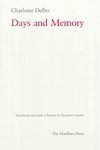
In Auschwitz, memory meant life: remembering the humanity extinguished by the death camps and hoping to survive to tell what had been endured. Charlotte Delbo, a non-Jew sent to Auschwitz for being a member of the French resistance movement, recalls the poems, vignettes, and meditations that fed her companions' spirits, interweaving her experiences with the sufferings of others and depicting dignity and decency in the face of inhumanity.
Mainwaring, Stephanie Christabel Jean. Time and Memory in the Works of Charlotte Delbo. 2002. Print.